
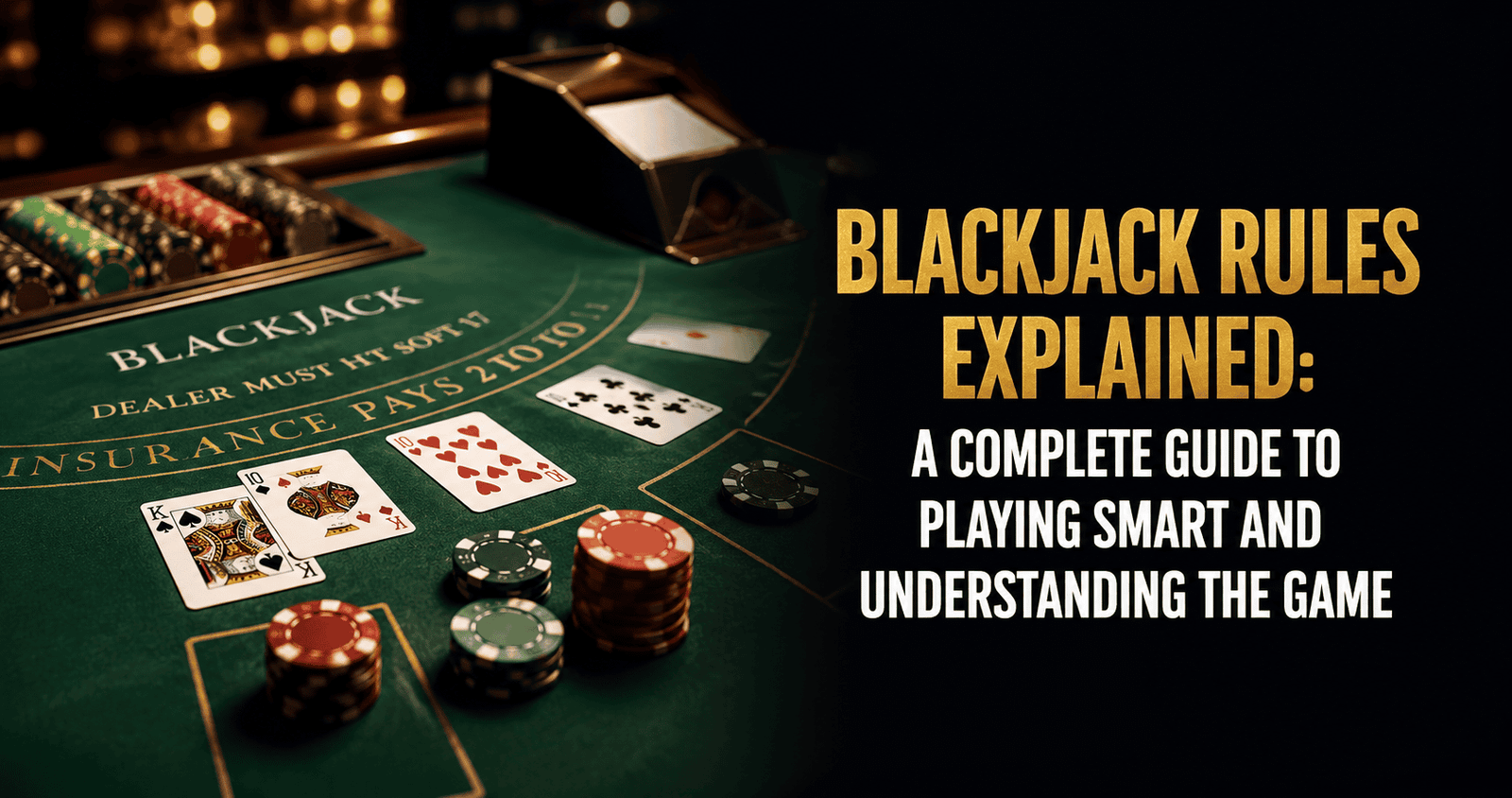
Blackjack Rules Explained: A Complete Guide to Playing Smart and Understanding the Game
Blackjack is one of the most popular casino card games because it combines simple rules with meaningful player decisions. Unlike many games that rely almost entirely on luck, blackjack gives players the opportunity to improve their understanding of the game through knowledge and practice.
Whether you are playing at a land-based casino or online, learning the blackjack rules is the first step toward making informed decisions at the table. Understanding how cards are valued, when to hit or stand, and how the dealer plays can make the game easier to follow and more enjoyable.
The best blackjack players are not those who chase luck—they are the ones who understand the rules before placing a bet.
This guide explains the core blackjack rules in clear language, along with practical tips, common mistakes, and answers to frequently asked questions.
Blackjack Rules at a Glance
| Rule | Explanation |
|---|---|
| Objective | Finish with a hand closer to 21 than the dealer without going over. |
| Number Cards | Worth their face value. |
| Face Cards | Jack, Queen, and King are worth 10. |
| Ace | Counts as 1 or 11, whichever benefits the hand. |
| Blackjack | An Ace plus any 10-value card as the first two cards. |
| Bust | A hand value above 21. |
| Dealer Rule | Dealer must follow fixed house rules when drawing cards. |
What Are Blackjack Rules?
The basic blackjack rules are straightforward. Each player competes only against the dealer, not against other players at the table.
Every player receives two cards, and the dealer also receives two cards. Usually, one dealer card is visible while the other remains hidden until the appropriate stage of the game.
The aim is simple:
- Reach a hand total closer to 21 than the dealer.
- Avoid exceeding 21.
- Win by having a higher valid total or by the dealer busting.
Card Values in Blackjack
Understanding card values is essential.
| Card | Value |
|---|---|
| 2–10 | Face value |
| Jack | 10 |
| Queen | 10 |
| King | 10 |
| Ace | 1 or 11 |
The Ace is unique because it automatically counts as either 1 or 11, depending on which value benefits the player’s hand.
For example:
- Ace + 8 = 19
- Ace + King = Blackjack
- Ace + 9 + 5 = 15 (Ace changes from 11 to 1)
How a Blackjack Round Works
A standard blackjack round usually follows these steps:
- Players place their bets.
- Two cards are dealt to each player.
- The dealer receives two cards.
- Players choose their actions.
- Dealer reveals the hidden card.
- Dealer completes the hand according to house rules.
- Winning hands receive payouts.
Although different casinos may offer rule variations, the overall flow remains similar.
Player Options
Hit
Receive another card to improve your hand.
Stand
Keep your current hand and end your turn.
Double Down
Increase your original bet and receive one additional card.
Split
If your first two cards are the same value, many casinos allow you to split them into two separate hands.
Surrender
Some casinos allow players to surrender before completing the hand and recover part of their original wager.
Not every casino offers every option, so checking the table rules is always recommended.
What Is Blackjack?
A blackjack is the strongest starting hand possible.
It consists of:
- Ace
- Any card worth 10 points
Examples include:
- Ace + King
- Ace + Queen
- Ace + Jack
- Ace + 10
A natural blackjack generally receives a higher payout than a standard winning hand, although payout rules vary by casino.
Dealer Rules
Unlike players, dealers do not choose their actions.
Instead, dealers must follow fixed casino rules.
Common dealer rules include:
- Draw cards until reaching at least 17.
- Stop drawing once required total is reached.
- Follow the same procedure for every player.
Because dealers cannot change strategy, understanding these rules helps players know what to expect.
Soft Hands and Hard Hands
A soft hand contains an Ace counted as 11.
Example:
Ace + 6 = Soft 17
A hard hand either has no Ace or the Ace counts as 1.
Example:
10 + 7 = Hard 17
Knowing the difference helps players understand why some decisions differ depending on the cards held.
Common Blackjack Rule Variations
Different casinos may use different rules.
Examples include:
- Number of decks used
- Dealer stands or hits on soft 17
- Double down restrictions
- Split limits
- Blackjack payout differences
Reading the table rules before playing helps avoid surprises.
Common Mistakes Players Make
Many beginners make similar mistakes when learning blackjack.
Avoid these common errors:
- Playing without understanding the table rules.
- Assuming every casino follows identical rules.
- Ignoring card values.
- Taking unnecessary cards on strong hands.
- Failing to manage a gambling budget.
- Chasing losses after several losing rounds.
Learning the basic blackjack rules first is often more valuable than trying advanced strategies immediately.
Tips for New Players
If you’re new to blackjack, consider these practical tips:
- Learn the basic rules before wagering real money.
- Read the table information carefully.
- Start with lower betting limits while learning.
- Understand every available player action.
- Set spending limits before you begin.
- Take breaks during longer sessions.
- Remember that blackjack outcomes still involve chance.
Understanding House Edge
Blackjack generally has one of the lower house edges among common casino table games when played under favorable rules and with sound decision-making. However, the exact house edge depends on the specific rules used by the casino and the choices made by the player.
Rule variations such as the number of decks, blackjack payout, and dealer actions can all influence the house edge.
Responsible Gambling
Blackjack should always be treated as entertainment rather than a way to make money.
Good responsible gambling habits include:
- Setting a budget before playing.
- Never gambling with money needed for essential expenses.
- Taking regular breaks.
- Avoiding emotional betting decisions.
- Stopping when your entertainment budget is exhausted.
Conclusion
Learning the blackjack rules is the foundation of enjoying one of the world’s most popular casino card games. By understanding card values, player options, dealer procedures, and common rule variations, you can approach the game with greater confidence.
While no strategy guarantees success, knowing the rules allows you to make informed decisions and better understand how each hand unfolds. Whether you play online or at a physical casino, always choose licensed operators, read the table rules carefully, and gamble responsibly.
FAQS
What is the objective of blackjack?
The objective is to finish with a hand closer to 21 than the dealer without going over 21.
What happens if I go over 21?
If your hand exceeds 21, you bust and automatically lose the round.
What cards make a blackjack?
An Ace together with any 10-value card (10, Jack, Queen, or King) dealt as your first two cards.
Can I split any pair?
Rules vary by casino, but many tables allow players to split pairs of equal value, subject to table rules.
Are blackjack rules the same everywhere?
No. Casinos may differ in the number of decks used, dealer rules, doubling options, splitting rules, surrender availability, and blackjack payouts. Always read the table rules before playing.